DJ + Live Guitar · 5 min read
Can a DJ Play Live Guitar at the Same Time?
A solo DJ can technically strap on a guitar, but playing live guitar over a DJ set is almost always performed by a two-person hybrid act to preserve seamless mixing.
By Jordan Miller · Mixmode (Austin, TX)
Published October 25, 2026
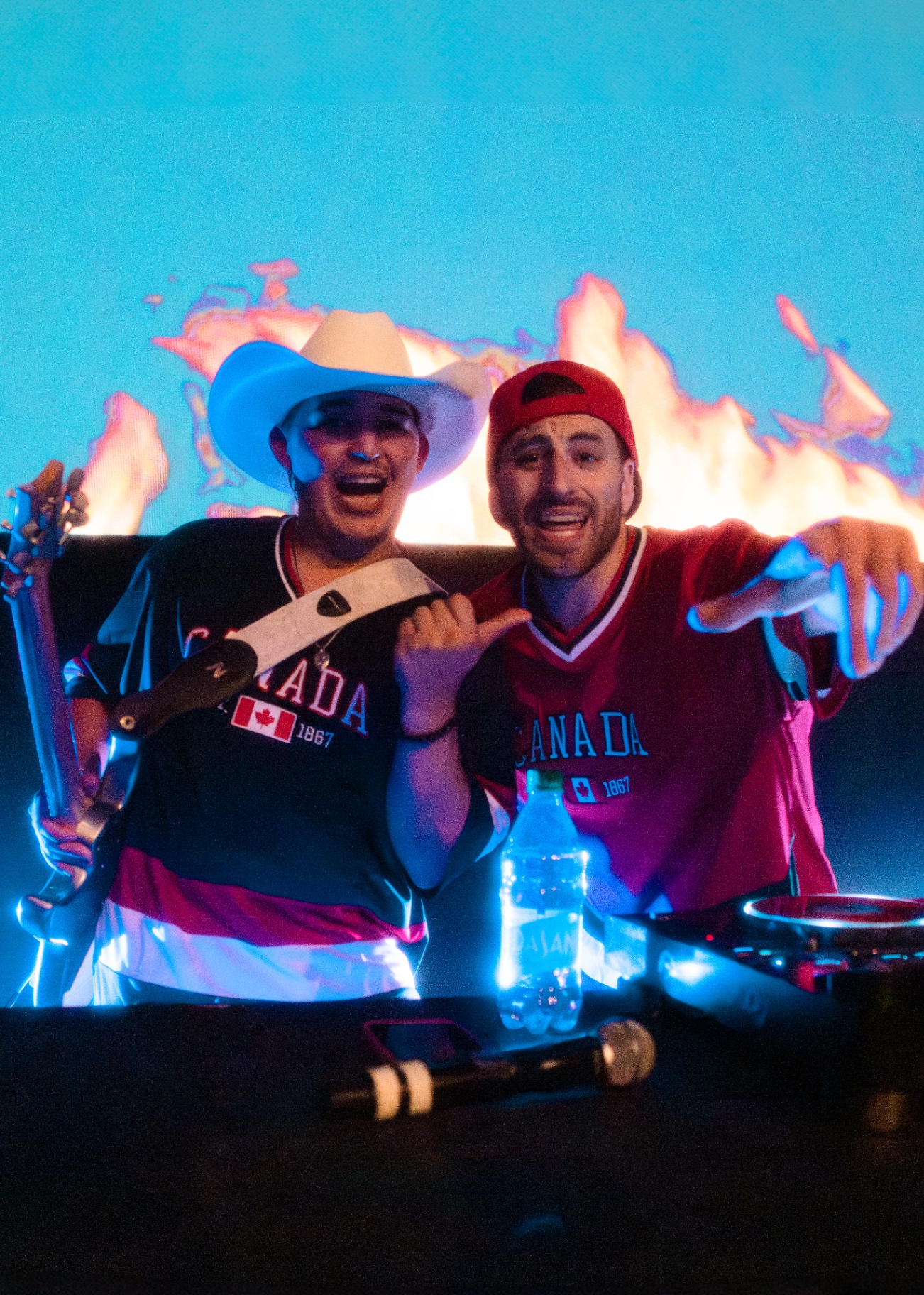
A single performer can technically strap on an electric guitar while standing behind DJ decks, but running both instruments at the exact same moment compromises the music. In professional event settings, playing live guitar over a DJ set works best as a coordinated two-person hybrid act where one artist drives the mixing console and another commands the fretboard. Splitting these roles ensures transitions remain razor-sharp while the live instrument delivers genuine concert energy.
Quick Answer: Solo Performer vs. Dedicated Duo
- The solo compromise: A solo artist trying to juggle both usually pre-records long DJ transitions or relies on static backing loops, limiting spontaneous track selection.
- The duo advantage: A dedicated DJ reads the room and blends records in real time while the live guitarist interacts directly with the crowd.
- How Mixmode handles it: In our hybrid setup, Jordan Miller directs the DJ decks, stems, and production, while Kristian Cruz performs live electric guitar.
- The listener experience: Guests get the uninterrupted pacing of an elite club set combined with the visceral grit of a live rock show.
Can One Person Truly DJ and Play Guitar at Once?
Solo performers who market themselves as a DJ playing live guitar usually rely on automated setlists or repetitive loops. Active DJing demands two free hands to manipulate jog wheels, manage high-pass and low-pass filters, trigger cue points, and ride gain faders. Meanwhile, playing expressive electric guitar requires two hands to articulate notes, bend strings, and engage effect pedalboards.
When a single musician attempts both simultaneously, one of two things suffers. Either the guitar playing reduces to simple chord strumming with one hand while the other twists EQ knobs, or the DJing is downgraded to pressing "play" on an uneditable backing track. In high-stakes environments like weddings, corporate gatherings, and college formals, dance floors empty when transitions drag or sound repetitive.
Understanding the structural differences between formats helps planners select the right entertainment option. To dive deeper into how hybrid lineups compare to solo booth operators, check out our guide on DJ and live guitar versus traditional DJ options.
Solo DJ-Guitarist vs. Two-Person Hybrid Duo
| Performance Factor | Solo Performer Doing Both | Dedicated Hybrid Duo (DJ + Guitarist) |
|---|---|---|
| Crowd Reading & Agility | Limited; performer is locked to rigid pre-planned loops | Immediate; DJ can swap tracks on the fly while guitarist adapts |
| Musical Execution | Compromised; basic riffs or simplified mixing | High caliber; intricate solos and seamless four-deck blending |
| Stage Presence | Static; performer cannot leave the DJ console | Dynamic; guitarist roams the dance floor using wireless transmitters |
| Mix Transitions | Often jarring or reliant on pre-recorded sequences | Flawless beatmatching, drop-mixing, and live tempo shifts |
| Failure Risk | High cognitive load increases audio mistakes | Lower; each performer focuses on one instrument |
How Does a Two-Person Hybrid Setup Actually Work?
In our performances, the chemistry relies on total role clarity. Jordan Miller manages the DJ console, cueing up records across genres like Country EDM, house, 2000s emo, pop-punk, hip-hop, and Latin club beats. Jordan shapes the low-end frequencies, sculpts transitions, and fires off samples that keep the dance floor moving without pause.
Kristian Cruz handles live electric guitar, using digital modeling units that output directly into our master sound board. Kristian isn't locked down by cables or heavy stage amplifiers. Equipped with wireless bodypacks, he moves freely between the DJ stage and the center of the dance floor, ripping lead lines over modern EDM drops and rhythm riffs over classic anthems.
This two-person dynamic solves the audio clash that ruins unmanaged hybrid sets. If a guitar solo needs center stage, Jordan pulls the vocal or lead synth frequencies out of the DJ mix using dynamic EQ filters. If the crowd responds to a sudden beat switch, Kristian adjusts his tone and rhythmic phrasing instantly to match the new groove.
Planners evaluating this format for milestone celebrations can read our breakdown on whether live guitar is worth adding to a wedding DJ to understand how the duo concept alters guest engagement.
What Technical Challenges Occur When Combining Live Guitar with a DJ Set?
Integrating electric guitar into high-output DJ audio requires deliberate engineering. Venues that drop an untested guitarist on top of a standard DJ often encounter three major technical hurdles:
Frequency Clashing in the Midrange
Dance records are already mastered to fill the entire frequency spectrum. Vocals, keyboard synths, and aggressive brass sections occupy the exact 500 Hz to 4 kHz range where electric guitar notes thrive. Without an active DJ cutting competing midrange frequencies live, the guitar turns into unintelligible mud over the PA speakers.
Latency and Timing Drift
Digital DJ controllers and digital guitar processors process audio at varying buffer speeds. If audio monitoring lags by even 15 milliseconds, the guitarist's downbeats will drag behind the kick drum. Professional acts eliminate this timing drift by utilizing dedicated in-ear monitors or low-latency hardwired monitoring systems synced to the master output clock.
Volume Spikes and Gain Staging
Traditional guitar amplifiers project sound in a narrow cone, making the stage deafening while leaving the back of the room thin. Running digital guitar modelers directly into the front-of-house mixing console allows the sound team to treat the guitar like a studio-tracked instrument, leveling out volume spikes while preserving live tone dynamics.
To see how this setup performs across varied venue styles, explore our overview of the best events for DJ and live guitar combinations, along with our comprehensive hybrid DJ with live guitar pillar resource.
FAQs
Why not just hire a full live band instead?
A full five-piece band requires massive stage space, lengthy sound checks, and scheduled breaks between 45-minute sets. A hybrid duo occupies a compact footprint, plays without dance-floor-killing intermissions, and covers an infinite catalog of contemporary remixes and original recordings.
Can the guitarist play on every single song?
A live instrument has the greatest emotional impact when used with dynamic intention. While our guitarist performs across the vast majority of the show, pulling the guitar back during minimal house breakdowns makes its explosive return during an EDM drop hit that much harder.
What does the load-in look like for a DJ and guitarist duo?
Load-in is streamlined compared to a traditional band. Because we run direct digital guitar modeling without heavy speaker cabinets, our entire duo setup shares a compact footprint that loads into banquet halls, private clubs, and festival stages.
If you want to bring the raw energy of live electric guitar and continuous festival-grade DJ mixing to your next celebration, explore our DJ and live guitar booking page or reach out directly at booking@mixmodemusic.com to check open dates and production options.
People also ask
Related questions
- How much stage space does a DJ and guitarist duo require?
- A standard hybrid duo needs roughly a ten-foot by eight-foot area, accommodating a DJ booth, monitor wedges or transmitter stations, and clear movement space for the guitarist.
- Read the full answer →
- What audio gear is required to run live guitar through a DJ setup?
- The setup requires professional wireless instrument systems, digital amp modelers, dedicated mixer channels, and independent in-ear or stage monitor feeds so both players stay locked in sync.
- Is a hybrid DJ duo louder than a standard private event DJ?
- Not inherently; because the guitar routes directly through the main PA system rather than an unmanaged loud tube amplifier, total volume remains completely controllable.
- Can the guitarist roam into the crowd while the DJ performs?
- Yes, wireless instrument transmitter packs allow the guitarist to step off the stage and perform guitar solos directly on the dance floor while the DJ maintains the dance mix.
Stay in the loop
Not booking today?
Tour dates, new reels, and a heads up when dates open up. No spam, unsubscribe anytime.
Keep reading
Related guides
Emo & Pop-Punk
Why Live Guitar Elevates Emo DJ Sets
Live electric guitar amplifies emo DJ sets by recreating iconic guitar riffs and hooks, enhancing the emotional impact of the music, and driving crowd engagement with a dynamic stage presence. This combination delivers a unique energy that a traditional DJ set cannot match, transforming familiar tracks into live experiences.
Corporate Events
Why DJ + Live Guitar Excels at Corporate Events
A DJ and live electric guitar duo provides versatile, high-energy entertainment perfectly suited for corporate events, offering a dynamic musical experience that bridges diverse generational and taste preferences. This hybrid format combines the breadth of a DJ's catalog with the excitement and improvisation of live instrumentation, creating an engaging atmosphere for any company gathering.
Weddings
Hiring a Wedding DJ with Live Guitar: Your Essential Guide
Hiring a wedding DJ with live guitar combines the versatility of a DJ with the dynamic energy of a live musician, offering a unique entertainment experience for your special day. This hybrid approach ensures a diverse musical journey, from curated playlists to improvisational solos, making your celebration memorable.
Browse the full Mixmode Knowledge Base.